What Is a VIN Check & Why You Need One Before Buying a Used Car
If you’re shopping for a used car and haven’t run a VIN check yet, you’re gambling with thousands of dollars. That’s not scare tactics — it’s math. Every year, hundreds of thousands of American buyers end up with vehicles hiding accident damage, rolled-back odometers, or salvage titles they never knew about.
A VIN check before buying a used car is the single most effective way to protect yourself. It takes about two minutes, costs less than a tank of gas, and could save you from a $5,000+ mistake.
Here’s everything you need to know.
What Exactly Is a VIN Check?
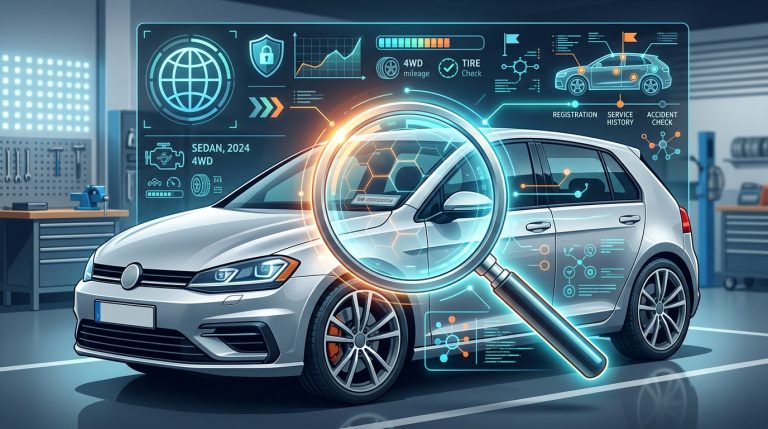
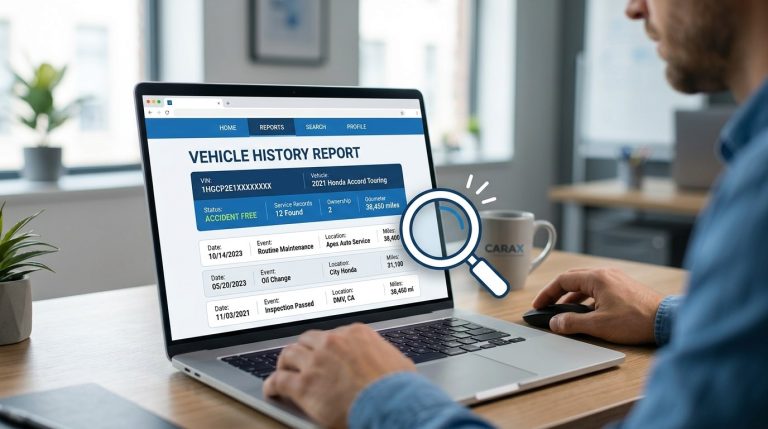
A VIN check is a background check for a car. You enter the vehicle’s 17-character Vehicle Identification Number (VIN) into a reporting service, and it pulls up the car’s entire recorded history — accidents, title changes, odometer readings, theft records, recalls, and more.
Every time something significant happens to a vehicle — a crash, an insurance claim, an ownership transfer — it gets logged against that VIN. A VIN check compiles all those records into a single, readable report using data from insurance companies, DMV records, auto auctions, service shops, and NMVTIS (the federal government’s official vehicle title database).
VIN Check vs. VIN Decoder — What’s the Difference?
These get confused all the time, so let’s clear it up:
-
VIN Decoder: Tells you what the VIN number itself means — manufacturer, model year, engine type, assembly plant. It reads the code, not the history. Free and useful for confirming specs.
-
VIN Check (Vehicle History Report): Pulls the actual history of that specific vehicle — accidents, owners, title changes, odometer records. This is what protects you.
A VIN decoder tells you “this is a 2019 Honda Civic.” A VIN check tells you “this 2019 Honda Civic was in a rear-end collision in 2021, had its odometer rolled back, and was titled as salvage in Florida before being re-titled in Georgia.”
You need both, but the VIN check is the one that saves you money.
What Information Does a VIN Check Reveal?
A solid vehicle history report will include:
- Accident & damage history — collisions, severity, which areas were hit
- Title records — clean, salvage, rebuilt, flood, junk, or lemon brands
- Odometer readings — mileage timeline across service visits, inspections, and title transfers
- Ownership history — how many owners, how long each kept it
- Theft records — whether it was ever reported stolen
- Recall information — open, unaddressed safety recalls
- Lien records — whether money is still owed on the car
- Service & inspection history — maintenance records and state inspections
Not every report covers every data point — it depends on the service and what’s been reported. But reputable providers cover the essentials: accidents, title brands, odometer, and theft.
7 Reasons You Should ALWAYS Run a VIN Check
A pre-purchase inspection by a mechanic is smart — but a mechanic can only see what’s physically there. They can’t tell you the car was totaled in Texas, rebuilt in a garage, and shipped to your state with a washed title. That’s what a VIN check catches.
1. Uncover Hidden Accident History
Professional body shops can make a seriously wrecked car look flawless. But structural damage underneath compromises crash protection — a car that’s been in a major front-end collision may not protect you the same way in the next one, even if the cosmetic repairs are perfect.
A VIN check shows reported accidents, including severity and which areas were hit.
2. Detect Odometer Rollback Fraud
This one’s bigger than most people realize.
NHTSA estimates that 452,000 vehicles are sold each year with fraudulent odometer readings. And it’s getting worse — a December 2025 CARFAX study found 2.45 million vehicles currently on U.S. roads are suspected of having rolled-back odometers, a 14% jump from the year before.
The average victim loses about $3,300 — they’re paying for a “low-mileage” car that actually has significantly more wear.
A VIN check lays out a timeline of recorded odometer readings. If the mileage goes down between entries, you’re looking at fraud. It’s that simple, and it’s nearly impossible to catch without the data.
3. Check for Salvage or Rebuilt Titles
When an insurance company declares a car a total loss — usually because repair costs exceed 70-80% of the car’s value — it gets a salvage title. After repairs, it may be re-titled as rebuilt.
Here’s the problem: title washing. Scammers buy salvage vehicles cheap, move them to a state with lax title laws, and get a clean title. An estimated 450,000+ vehicles per year go through this process, and the average victim loses around $6,200.
After Hurricanes Helene and Milton in 2024, over 800,000 vehicles were flooded. Many of those cars are working their way into used car markets across the country right now — far from the states where the flooding happened. As of early 2025, CARFAX counted 482,000 water-damaged cars on U.S. roads.
A VIN check that pulls from NMVTIS — the federal database — can catch title brands even when they’ve been washed at the state level.
4. Verify the Car Isn’t Stolen
NICB reported 850,708 vehicles stolen in the U.S. in 2024 — down 17% from the record 1,020,729 in 2023, but still a staggering number.
If you unknowingly buy a stolen vehicle, you lose everything. The car gets seized, you don’t get your money back, and you may face legal complications. A VIN check flags theft records before you hand over a cent.
5. Review Recall & Safety Information
Millions of vehicles on U.S. roads have open, unaddressed safety recalls — from faulty airbags to defective braking systems.
A VIN check flags open recalls so you can get them fixed (for free, at any dealership) or factor it into your decision.
6. Confirm Ownership History
Ownership patterns tell a story:
- One owner, 5+ years: Likely well-maintained
- Four owners in three years: Red flag — why does nobody keep this car?
- Fleet/rental: Higher mileage but usually on a strict service schedule
A VIN check shows the full ownership chain, giving you context behind the car’s condition.
7. Negotiate a Better Price
A VIN check is a negotiation weapon.
Report shows a minor accident the seller didn’t mention? Leverage. Three owners instead of the “one careful owner” the listing claims? Leverage. Open recall? Leverage.
Buyers armed with VIN reports routinely save hundreds or thousands — far more than the cost of the report.
How to Run a VIN Check (Step-by-Step)
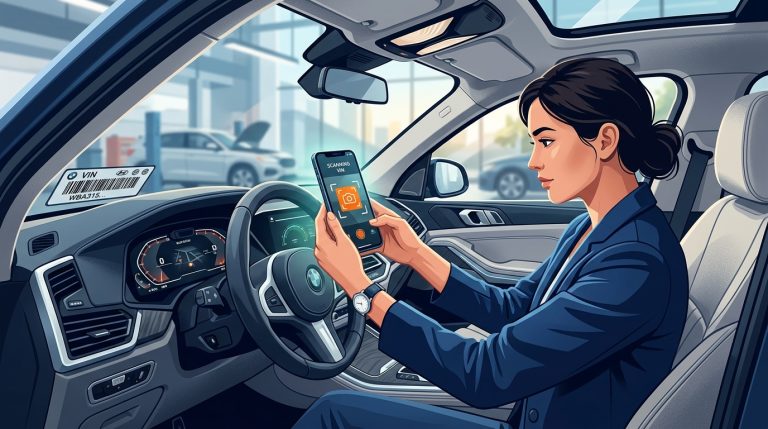
Running a VIN check is straightforward. The whole process takes a few minutes.
Where to Find the VIN Number
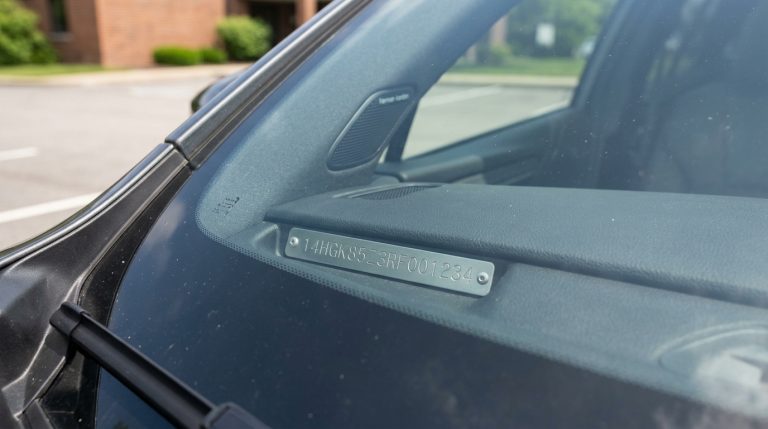
The VIN is a 17-character code unique to every vehicle built since 1981. Find it here:
- Dashboard — Driver’s side, where the dash meets the windshield (visible through the glass)
- Driver’s door jamb — Sticker on the frame when you open the door
- Registration/insurance docs — Listed on your paperwork
- Online listings — Many sellers include it. If they won’t share it, that’s a red flag.
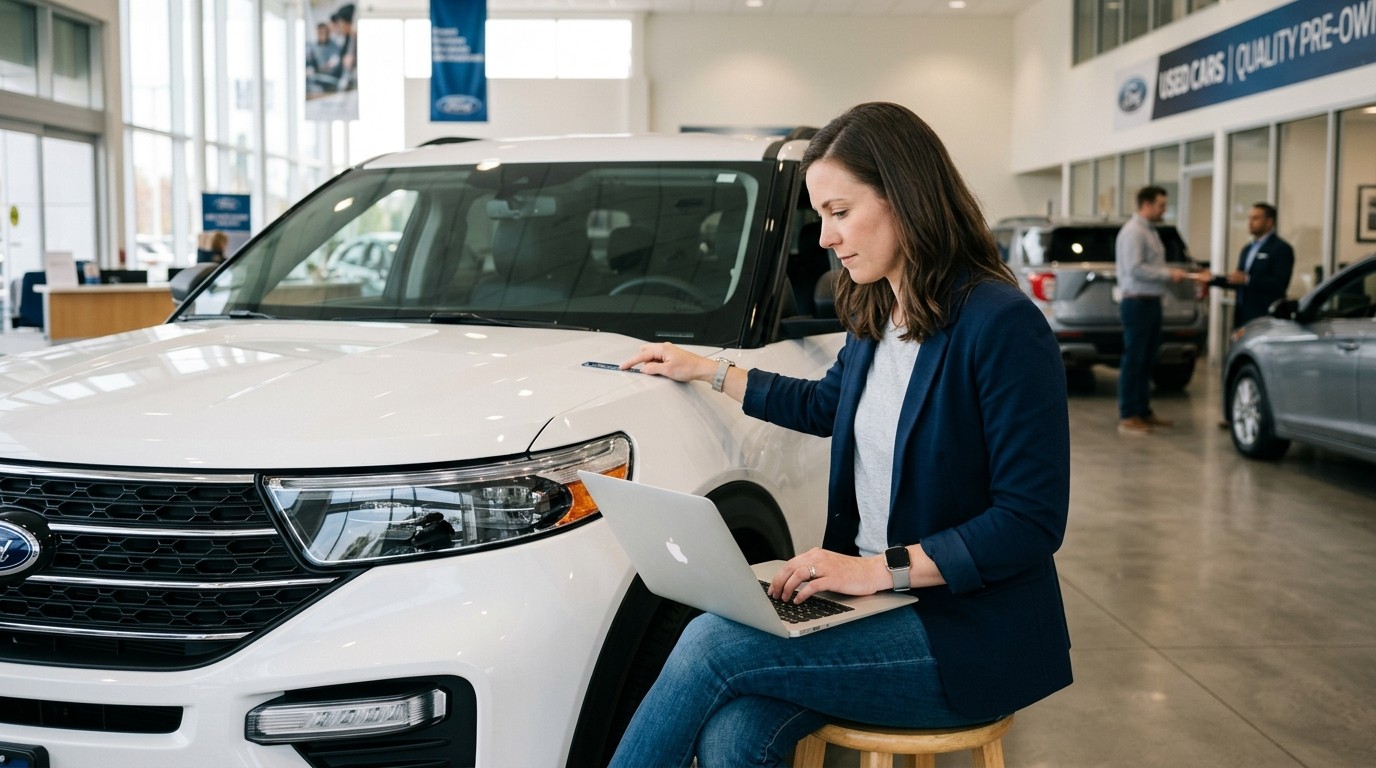
Pro tip: Always verify in person that the dashboard VIN matches the door jamb VIN and the title. Mismatches indicate VIN cloning — where a stolen car gets a clean VIN from a similar vehicle.
Best VIN Check Services Compared
There are several providers, and they’re not all created equal:
| Service | Single Report | Best Bulk Price | NMVTIS Data | Best For |
|---|---|---|---|---|
| VINCheckup | $19.95 | $4.99/report (10-pack) | ✅ Yes | Best value — same federal data at a fraction of the price |
| Carfax | ~$44.99 | ~$16.67/report (6-pack) | ❌ No | Brand recognition, but you’re paying a premium for the name |
| AutoCheck | ~$24.99 | ~$12.50/report (bundle) | ❌ No | AutoCheck Score can be useful |
| NICB VINCheck | Free | Free | Partial | Basic theft/salvage check only — not a full report |
Here’s the thing most people don’t realize: VINCheckup pulls from NMVTIS, the same federal database that tracks title records across all 50 states. This is the system the U.S. Department of Justice set up specifically to combat title fraud and odometer tampering.
Carfax has great brand recognition — but at nearly $45 per report, it’s hard to justify when VINCheckup gives you NMVTIS-certified data for a third of the price. And if you’re shopping for multiple vehicles (which most buyers are), VINCheckup’s 10-pack at $49.95 brings it down to $4.99 per report. That’s less than 90% cheaper than a single Carfax.
👉 Check any VIN with VINCheckup — starting at $4.99/report →
VINCheckup Review 2026: Is It Worth It?
What to Look for in Your Report
Once you have the report, focus on these areas:
- Title history — Salvage, rebuilt, flood, or junk brands are deal-breakers for most buyers. Resale value tanks and insurance gets complicated.
- Accident records — Minor fender benders are fine. Structural damage, airbag deployment, or multiple accidents? Walk away or negotiate hard.
- Odometer consistency — Mileage should increase steadily. Any decrease between readings = rollback.
- Number of owners — Rapid turnover is worth questioning.
- Open recalls — Unaddressed safety issues. Free to fix at any authorized dealer.
- Theft records — If it shows as stolen, don’t proceed.
How Much Does a VIN Check Cost?
Compared to the cost of a used car, this is pocket change:
- VINCheckup: $19.95/report, or $4.99/report with the 10-pack ($49.95)
- Carfax: ~$44.99/report
- AutoCheck: ~$24.99/report
The average used car costs around $28,000. A $5-$15 VIN check is a 0.05% insurance policy on a five-figure purchase. If it reveals even one undisclosed issue, it either saves you from a bad buy or gives you negotiation leverage worth many times the cost.
The real cost isn’t running a VIN check — it’s not running one.
Can You Get a Free VIN Check?
Sort of — but with major limitations.
- NICB VINCheck (nicb.org/vincheck) — Theft and salvage records only. No accidents, odometer, ownership, or recalls.
- NHTSA Recall Check (nhtsa.gov/recalls) — Open safety recalls only.
- Some dealer websites — A few dealers show free Carfax reports in listings. Use them, but verify independently.
Free checks are better than nothing, but they only scratch the surface. They won’t catch accidents, odometer fraud, flood damage, or title washing.
For private-party purchases (Craigslist, Facebook Marketplace, OfferUp), a paid VIN check is non-negotiable. There’s no dealer reputation on the line and no lemon law protection in most states. The report is your only safety net.
Final Verdict: Is a VIN Check Worth It?
Absolutely. Without question.
Here’s what you’re protecting yourself against:
- $3,300 — Average loss from odometer rollback fraud (CARFAX data)
- $6,200 — Average loss from buying a title-washed vehicle
- Total loss — If the car turns out to be stolen, you lose the car AND your money
- Safety risk — Hidden structural damage or unaddressed recalls put you and your family at risk
And here’s what a VIN check costs: as little as $4.99.
That’s not even a close call.
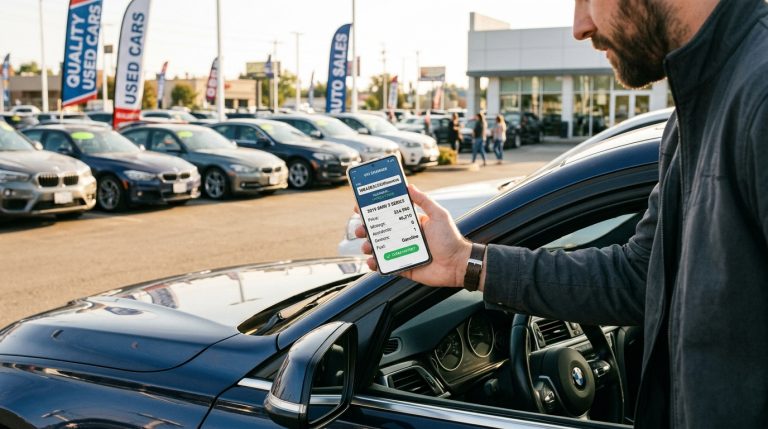
If you’re buying from a dealer, ask for the VIN report — many good dealers will provide one. If they won’t, that tells you something. If you’re buying private party, run the report yourself before you go see the car. It saves you a wasted trip if the history is bad, and it arms you with information if the history is good.
Our Recommendation
We use and recommend VINCheckup for vehicle history reports. They pull from NMVTIS (the federal database), the reports are comprehensive, and the pricing is the best we’ve found — especially the 10-pack at $49.95 ($4.99/report) for anyone shopping across multiple vehicles.
It’s the same critical data you’d get from the big-name providers, without the big-name markup.
👉 Run a VIN check with VINCheckup now →
Buying a used car is exciting — but it’s also one of the biggest purchases most people make. A two-minute VIN check is the simplest way to make sure the car you’re falling in love with doesn’t have a past you need to know about. Don’t skip it.